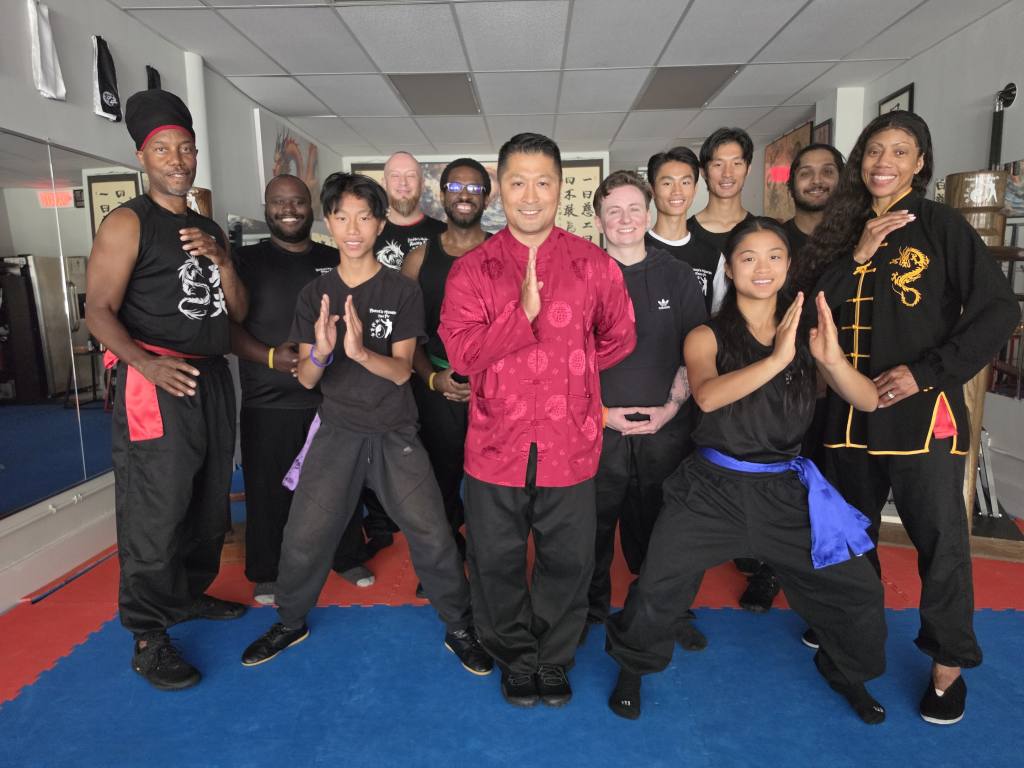
Welcome to Freddie's Modern Kung Fu Martial Arts Academy, where tradition meets innovation, and True Martial Artists are developed! Explore the rich world of Jeet Kune Do inspired Martial Arts training that blends together techniques found in Wing Chun, Choy Lay Fut, Tai Chi, Qigong, Boxing, Muay Thai, Tae Kwon Do, and Ground Fighting disciplines.
Why Choose Freddie's Modern Kung Fu Martial Arts Academy?
Expert Instructors: Learn from seasoned instructors. Our team is dedicated to imparting centuries-old wisdom with a modern twist.
Versatility: Whether you seek to defend yourself with punches, kicks, joint locking techniques, ground fighting techniques, or various weapons, we offer a comprehensive curriculum for all levels and interests.
Inclusive Community: Join a diverse and supportive community of martial artists. Train with like-minded individuals, share experiences, and foster friendships that go beyond the kwoon.
Which Style is Right for You?
Advanced Martial Arts Training inspired by Jeet Kune Do: Embrace the philosophy of the intercepting fist, where simplicity and adaptability reign supreme. It is the ultimate pinnacle of Martial Arts expression blending in multiple styles for ultimate efficiency for street self-defense and artistry. It is an advanced training program for serious practitioners. The curriculum includes Contact sparring, 1054 Movement FMK Wooden Dummy Phoenix Fist, Ground Survival, Focus Mitts, Boxer Fist, Dragon Fist, Total Body Strengthening, Conditioning, Flexibility, Heavy Bag, Speed Bag, Sandbag, JKD Flow. It is the Totality of Martial Arts Training.
Basic Self Defense Training inspired by Wing Chun and Boxing: Master the art of close-quarters combat, centerline theory, and efficient, direct techniques. Learn the Traditional Wing Chun 108 Movement Wooden Dummy Form, chain punching, trapping, forearm and fist conditioning, kicking techniques below the waistline, Chi Sao (Energy Hands), Slow Sparring, Boxer Fist, Heavy Bag, Focus Mitts, Sandbag, Partner Drills
Traditional Kung Fu Training inspired by Choy Lay Fut: Experience the dynamic fusion of traditional Southern Kung Fu with powerful striking and fluid movements. Learn to build a solid foundation of traditional Kung Fu stances. Work on balance, coordination, and strengthening of leg muscles for kicking techniques. Condition the forearms, hands, and fists for self-defense. Develop breathing techniques that synchronize with powerful striking techniques. Heavy Bag, Tiger Fist, Focus Mitts, Partner Drills.
Meditative Kung Tu Training inspired by Tai Chi Kung Fu & Qigong: Achieve balance and serenity with the gentle, flowing movements of this ancient martial art and moving meditation. Learn mindful breathing techniques that synchronize with each body movement. Qigong is a traditional Chinese practice that involves movement, meditation, and breath regulation to improve the body's energy flow. Qigong focuses less on muscle building and more on flowing movements that are easier to practice.
Weapons Training: Firearms, Knives, Nunchaku, Double Sticks, Chinese Broadsword, Bo/Staff, Sai
What We Offer:
Individualized Private Training: Work directly with Sifu Freddie Lee and recieve personalized attention in a customized training approach to ensure your progress aligns with your goals and abilities.
Small Group Training: Work either one on one with a senior student or with a small group of other beginner students under the lead of a senior student to build community. Work on a curriculum that is developed holistically for all students in attendance. Classes that are Fitness & Forms based are 1 hour and usually incorporate 30 min. of fitness and conditioning and 30 minutes of Martial Arts Skills development. Classes that are Forms focused are designed to focus an entire hour on Martial Arts Skills development.
The benefits of private (one-on-one) training vs. group training
Benefits of Private Training (One-on-One)
1. Personalized Correction
Every movement, stance, strike, breath, and posture is corrected instantly.
No drifting habits, no hiding in the group, no skipping details.
You progress faster because every minute is tailored to you.
2. Custom Training for Your Body & Skill Level
Private training allows the instructor to adjust for:
You get a training plan built specifically for you.
3. Faster Skill Development
Because the focus is 100% on you, you learn:
-
Technical detail
-
Precision
-
Timing
-
Internal mechanics
Private lessons reveal the “hidden” material that often takes years to discover in group classes.
4. Correcting Bad Habits Early
Bad habits form quickly and are hard to remove.
Private training stops that from happening.
5. Individualized Pacing
You can:
-
Slow down to master fundamentals
-
Speed up if you’re advancing quickly
-
Spend extra time on forms, sparring, or conditioning
No being held back—or rushed—by others.
6. Deep Transmission of Art
Traditionally, Kung Fu was learned privately between Sifu and disciple.
Important details, strategies, and deeper teachings are often passed on this way.
Private sessions allow for:
7. More Confidence in Group Classes
Students who train privately often feel:
-
More prepared
-
More confident
-
More technically sound
So they perform better in group settings.
Benefits of Group Training
1. Learning to Adapt to Many Opponents
In a group you interact with:
-
Different sizes
-
Different speeds
-
Different energies
-
Different skill levels
This builds adaptability—essential for real combat.
2. Team Energy & Motivation
Training around others:
Many people train better in a team environment.
3. Realistic Pressure Testing
Group drills and sparring develop:
-
Timing
-
Reaction speed
-
Stress management
You experience the chaos of multiple partners and multiple styles.
4. Healthy Competition
Group settings provide “friendly pressure,” which helps students:
-
Break plateaus
-
Train harder
-
Stay focused
5. Leadership Opportunities
Advanced students learn:
-
How to guide beginners
-
How to demonstrate
-
How to teach
This is a major part of martial arts maturity.
Which Is Better?
Neither. They serve different purposes.
Private training = faster technical mastery
Group training = broader experience and real-world pressure
The strongest martial artists usually do both.
Sash System: For those interested in developing leadership and working towards obtaining a sash for this kwoon, the expectations are listed below.
| Yellow |
Curiosity |
144 hours of Training |
| Orange |
Determination |
288 hours of Training |
| Green |
Growth |
432 hours of Training |
| Purple |
Strength |
576 hours of Training |
| Blue |
Control |
720 hours of Training |
| Brown |
Stability |
864 hours of Training |
| Red |
Power |
1008 hours of Training Minimum |
| White |
Humility |
1440 hours of Training Minimum |
| Blk/White |
Wisdom |
1584 hours of Training Minimum |
| Black |
Mastery |
1728 hours of Training Minimum |
Curriculum:
| Ox |
Fitness & Stretching |
| Tiger |
Choy Lay Fut / Sandbag / Wooden Dummy Conditioning / Tai Chi Yin |
| Boxer |
Jeet Kune Do / Boxing / Heavy Bag / Focus Mitts / Speed Bag |
| Dragon |
Jeet Kune Do / Chi Sao / JKD Flow / Contact Sparring |
| Phoenix |
Jeet Kune Do / 1092 FMK Wooden Dummy / Wing Chun 108 Wooden Dummy |
| Lion |
Chinese Lion Dance / Drum / Cymbals, Gong |
| Cobra |
Double Sticks |
| Shark |
Chinese Broad Sword |
| Serpent |
Nunchaku |
| Panther |
Jeet Kune Do Kicking |
| Monkey |
Bo/Staff |
| Eagle |
Sai |
| Fox |
Knives |
| Falcon |
Firearms Safety / Tactics / Range |
| Peacock |
Chinese Fan Dancing / Modern Fan Dancing |
Kung Fu Precepts
1. Train consistent, 3 times or more per week
2. Pay your dues
3. Be on time
4. Have Respect
5. Have Discipline
6. Have Balance
7. Have Integrity
8. Be Benevolent
9. Be Fit
10. Train Hard
11. Know the Forms
12. Meditate
13. Spar Well, Aim for Mastery, Compete with Compassion
14. Control your Ego
15. Control your Power
16. Have Humility
17. Always Learn and Learn to Unlearn
18. Follow the Tao
19. Lead by Example
20. Promote the Kwoon
21. Train Forever
36 Laws of Martial Arts
1. Protect yourself at all times
2. The Jab is the Key
3. Feet before hands, positioning is key
4. Balance is power
5. Breathe with purpose
6. Eyes up, mind sharp
7. Make them miss. Make them pay
8. Head movement is insurance
9. Keep your hands home
10. Know the distance
11. Block like a wall. Not a sponge, redirect everything
12. Never backup in a straight line
13. Punch with intent, not hope
14. Set traps, not trades
15. Body first, head later
16. Follow with fire
17. Precision over power
18. Combo or be comboed
19. Train like your in 2nd place
20. Pain is part of the process
21. Fear is fuel, let it sharpen your senses
22. Confidence comes from preparation
23. Discipline beats motivation, train even when you don't feel like it
24. Ego is a liability, the kwoon only respects real skill
25. Spar to learn, not to win, the kwoon is your classroom
26. Respect the kwoon hierarchy
27. Don't spar injured or tired and blame the results, save yourself for when it counts
28. Your sparring partners aren't your enemies they are your mirrors
29. Amateurs fight for glory, pros fight for mastery
30. The kwoon exposes everyone
31. Your diet is part of training
32. Recovery is a skill
33. Surround yourself with winners, the right team shapes your future
34. Stay humble in victory, hungry in defeat
35. The mirror is your toughest opponent, you can't hide from yourself
36. Martial Arts is a lifetime journey, its lessons go far outside the kwoon
Kwoon Code of Conduct
Guidelines for Conduct, Discipline, and the Spirit of Kung Fu
1. Respect Above All
All students shall show respect to the Sifu, fellow disciples, and the Kwoon.
- Bow (拱手禮 Gong Shou Li) upon entering and leaving the training hall.
- Address instructors formally as Sifu or Sihing/Sijeh (senior brother/sister).
- Listen with focus and humility; do not interrupt instruction.
Respect is the root of Kung Fu. Without respect, there can be no true learning.
2. Conduct and Behavior
The Kwoon is a place of discipline and self-cultivation.
- Maintain calmness, focus, and courtesy at all times.
- Refrain from unnecessary conversation or laughter during training.
- Treat training partners as brothers and sisters, with care and mutual trust.
Every action within the Kwoon reflects your heart and your art.
3. Proper Boundaries
A Sifu’s relationship with students must remain honorable and professional.
- Be kind and supportive, but avoid excessive familiarity or favoritism.
- Keep personal relationships, social media, and private interactions respectful and appropriate.
- All matters between teacher and student should serve learning, safety, and moral growth.
A Sifu teaches with compassion, but leads with dignity.
4. Equality and Harmony
All who enter the Kwoon are equal in spirit.
- Rank and seniority command respect, not privilege.
- Praise and correction are given according to effort and attitude, not favoritism.
- Encourage harmony among students — rivalry and gossip are not welcome.
Within the family of Kung Fu, harmony is strength.
5. Discipline and Etiquette
Tradition and order preserve the purity of the art.
- Arrive early, in a clean uniform and with a clear mind.
- Show gratitude to Sifu and classmates at the end of each session.
- Keep the Kwoon clean and sacred — it is a place of growth and respect.
External order reflects internal discipline.
6. The Sifu’s Way
The Sifu must embody the virtues of Kung Fu — respect, humility, and integrity.
- Teach with patience and fairness; guide without ego.
- Correct with compassion, never anger.
- Continue personal training to maintain skill and example.
A true Sifu leads by conduct, not by words.
7. The Student’s Path
Every disciple bears responsibility for their own growth and conduct.
- Train diligently, with a sincere heart.
- Accept instruction and correction without pride or resistance.
- Protect your partners and uphold the honor of your lineage.
The path of Kung Fu begins with obedience and ends with wisdom.
8. Beyond the Kwoon
The spirit of Kung Fu extends beyond training.
- Live with honor, humility, and compassion in daily life.
- Never use your skills for aggression, intimidation, or ego.
- Represent your Sifu and lineage with integrity wherever you go.
Kung Fu is not what you know — it is how you live.
9. The Spirit of Kung Fu
Kung Fu is a lifelong journey of body, mind, and spirit.
Through practice, discipline, and virtue, we seek harmony within ourselves and with the world.
Train with purpose. Live with honor. Uphold the Way (道, Dao).